

2017 just a few weeks old and we already see a lot of good initiatives in the area of mobility. We summarize them here together. http://www.seabubbles.fr/
From Uber to Nutonomy, cycling as delivery service, to the Tesla among the engines; the world of transport and mobility does not stand still. It is even lightning fast as we look at the many developments. Start-ups and technology have growing capabilities and this will certainly not stop. New models of vehicles are getting more and more attention. The Massachusetts Institute of Technology (MIT) believes that a new algorithm could help car sharing a lot so it can be used much better. It can even cause that the number of cars could be reduced by 75%. The new algorithm will ensure that 3,000 shared cars, with room for four passengers, provide about 98 percent of the demand for taxis in New York.
Uber freight
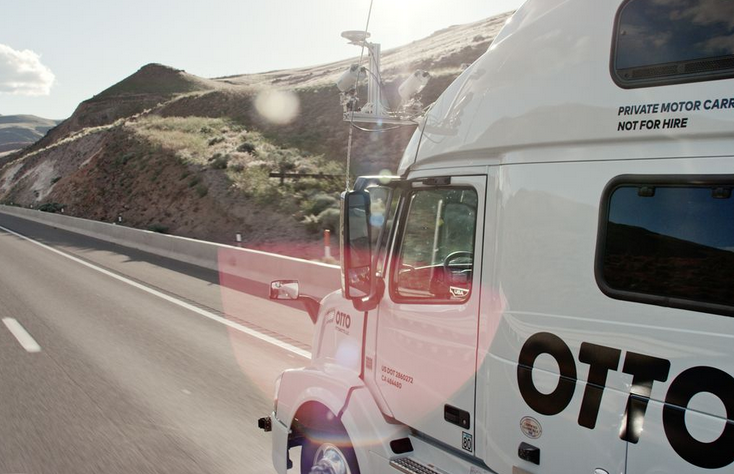
We are getting a bit tired of Uber. The question rises if we are asking ourselves: how is everything so innovative? They bought in 2016 Otto and what now seems to happen is that they also want to focus on the autonomous cargo. For this, the Uber Freight new website has now gone live. On the new website, people can sign up as a driver and people can send parcels. Yet, it is not that innovative. Their autonomous vehicles seems obvious if we link it to the purchased Otto.
Honda NeuV
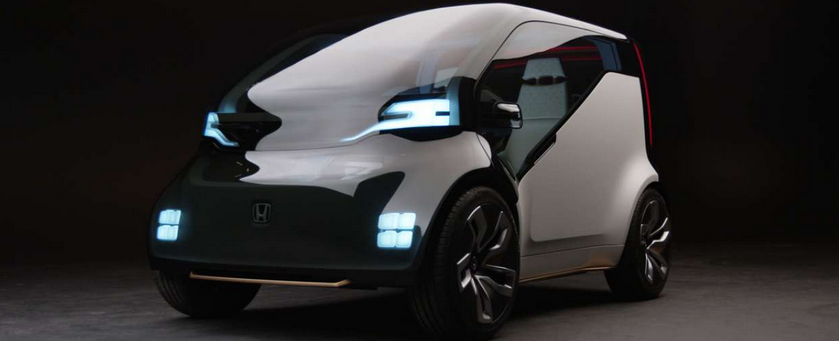
Car sharing. Again, there is still a long road ahead. This does not mean that there are not enough initiatives. Every car brand is familiar and active as it comes down to car sharing. Likewise, Honda recently presented their new town concept. The Honda NeuV. is a electric car that is able to pick up people at common places and to bring them back when the car owner does not use the car himself. The car can be used for a fee; this is how the car pays itself right back. This could sometimes be an added bonus for the owner of the Honda car.The self-propelled and electric car is also equipped with the so-called “emotion engine”. This system is able to recognize the emotions of drivers and could respond to it. When would the Honda car get into production? It is still a concept car, so the question is whether this will actually happen.
Charge
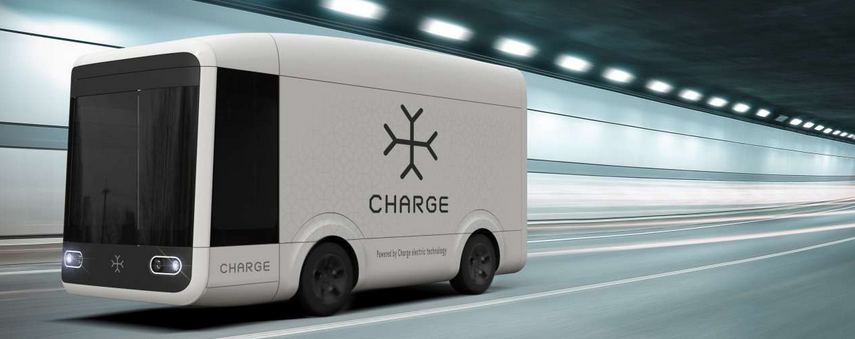
The electric 'vehicles' of Charge are made with composite material. That makes them very light and cheap to produce them. The trucks also have the hardware to run autonomously in the very near future.
They are sustainable trucks with an electric range of about 160 kilometres. A range extender can add another 800 kilometres to. Two people should be able to put together a Charge truck within 4 hours.
Seabubbles
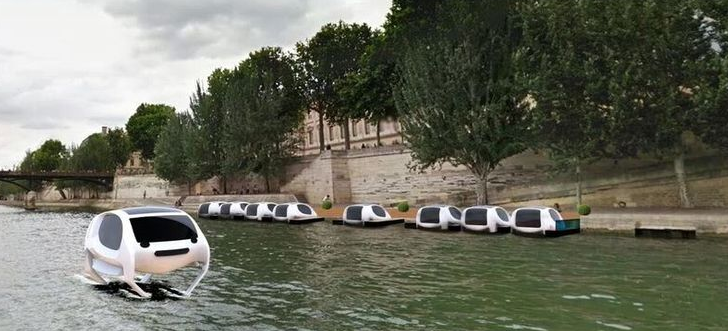
Amsterdam is going to test autonomous vessels to be used in the future as send packets. Paris, and possibly the US, will test autonomous “seabubbles” to transport people. The investment of the start-up has turned out positive, and the goal is to make the first test this summer. The vessels are thus autonomous and can transport five people at the same time.
Back in the days
This is just a small selection of examples where technology seems to dominate again. The interesting thing is that an expert from Toyota at CES 2017 clearly stated that man is still very far away from an autonomous car level 5. This car could drive without any human intervention. This is in contrast with the statement of other established automotive car brands, such as Volvo, Audi and Ford. Toyota does not believe in a near future with self-propelled vehicles. Human will continue in playing a major role to drive a car the upcoming decades.
In addition, besides all the high tech, we are also seeing some traditional vehicles coming back. Remember the good old cable car. Would this car come back at the Amsterdam IJ? Arcadis does not even think that this is such a bad idea. The construction of cable cars on the IJ in Amsterdam can make an important contribution for the improvements of traffic flows between Amsterdam North, West, and East. The research was funded through crowdfunding and raises the questions whether that is to come? Below you could find an example of a Faraday with their new electric car: The FF91. It is another small selection of the many examples that we are following nowadays.
Interested in an extensive session on the future of mobility and distribution? Extend Limits has a lot of experience and the latest insights on this topic. We gladly give a lecture or workshop. This always with top international futurist and trend analyst Tony Bosma.
