
Article Maatschappij en samenleving
Goodbye, earth?

Humanity has surpassed the quantity of CO2 with a limit of 400. According to science we past the road of no return.
March 2015. It was the time that the magical, or sinister, limit of 400 was surpassed. Earlier this extreme measurements were done but for the first time in the history of humanity, the 400 parts carbon dioxide per million were surpassed during a month. The level of safeness is 350 per million. This means that continuous and permanent damage done to our world according to science. But it gets even worse. Reports state that humanity nowadays fail to fall below the 400 threshold.
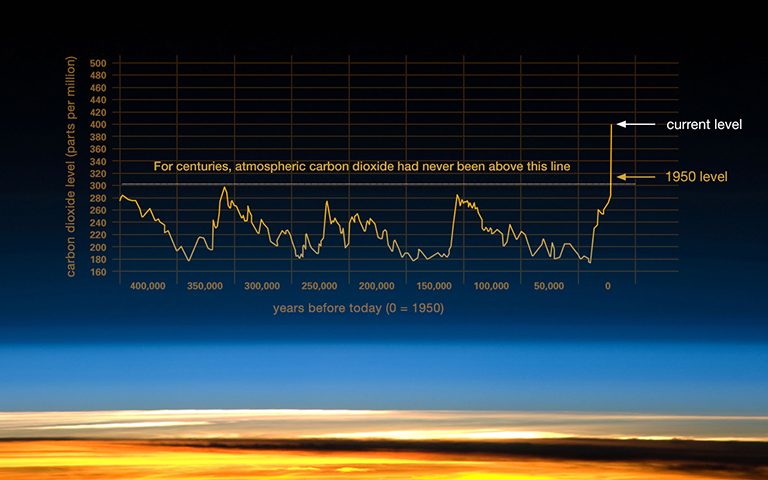
(source: National Oceanic and Atmospheric Administration. Some description adapted from the Scripps CO2 Program website, "Keeling Curve Lessons.")
A recent publication of Scripps Institution of Oceanography suggests that “it already seems safe to conclude that we won’t be seeing a monthly value below 400 ppm this year - or ever again for the indefinite future”. This is a conclusion they draw on basis of weekly analysis from the Hawaii’s Mauna Loa Observatory. Here, scientists are working continuously to monitor climate change since 1958. Their reports are more than disturbing. The question is why we hear so little about this?
What does this mean? There is no way back. At least, it does not seem so. Even though a lot of headlines think different. But Extend Limits looks beyond this. We listed some quotes about the consequences and challenges.
Crossing the 400 ppm threshold is a somber reminder that we haven't taken the action we need. Nevertheless there is good reason for hope -- activists all across the globe are fighting the fossil fuel industry and demanding clean, just and affordable solutions to our energy needs (Global Managing Director, 350.org)
The questions is whether we take enough initiatives to reduce the amount of CO2. We are all ware of the dangers. Consequences are already experienced daily. But we are still insufficiently aware of the actual effects. We keep blabbering about economy and the need for growth rather than focusing on a different system. Yet, we see more and more people picking up a more activist role. The only questions is whether that is enough.
We're in new territory for human beings--it's been millions of years since there's been this much carbon in the atmosphere. The only question now is whether the relentless rise in carbon can be matched by a relentless rise in the activism necessary to stop it (Bill McKibben Co-Founder, 350.org)
The biggest challenge for us as humanity is to say goodbye to our daily addictions. Consuming, oil, growth. It involves the creation of new systems. There lies the challenge. Not to make our existing world more efficient. Organizations that succeed in creating new systems are the winners of the future.

